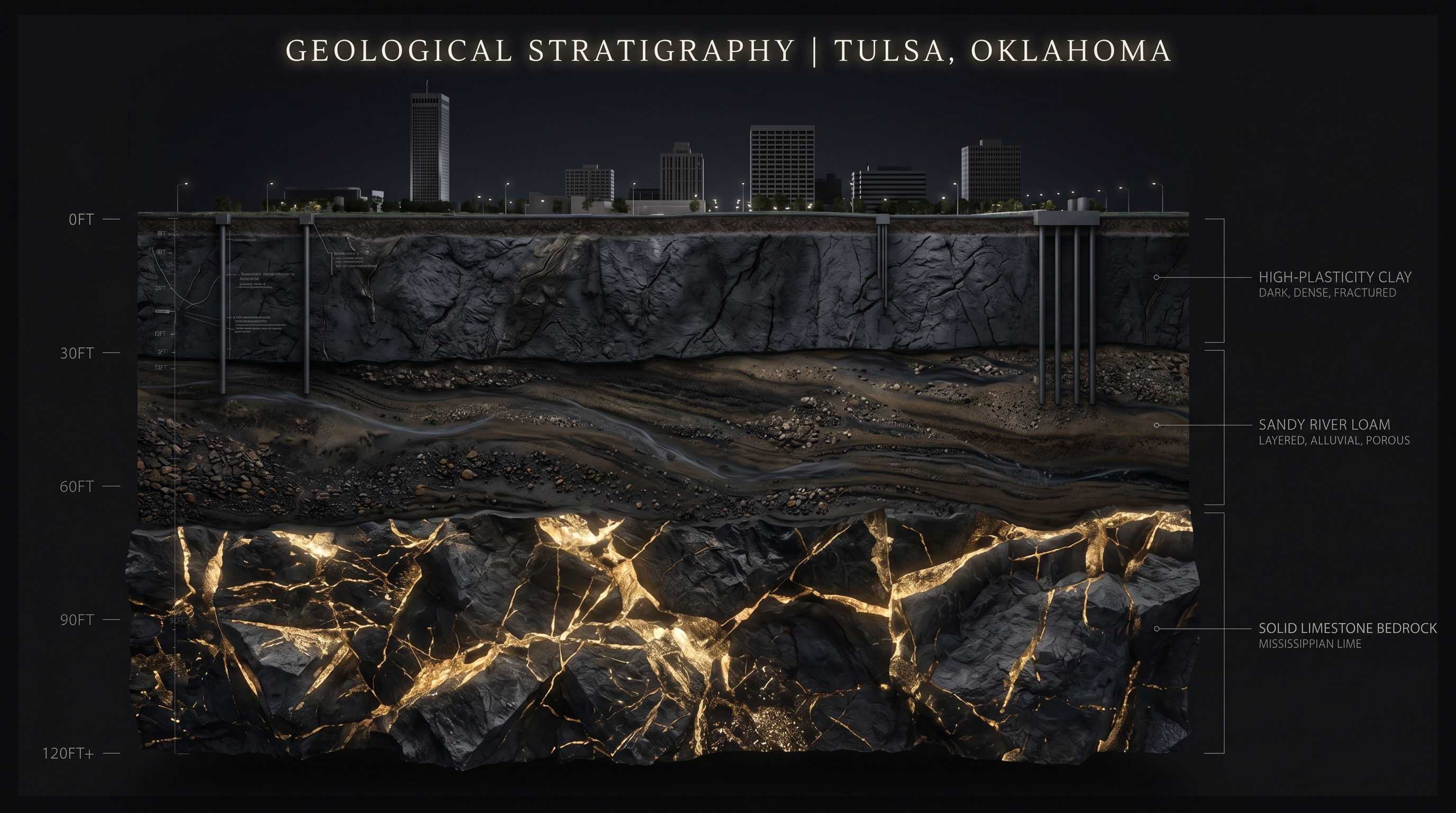
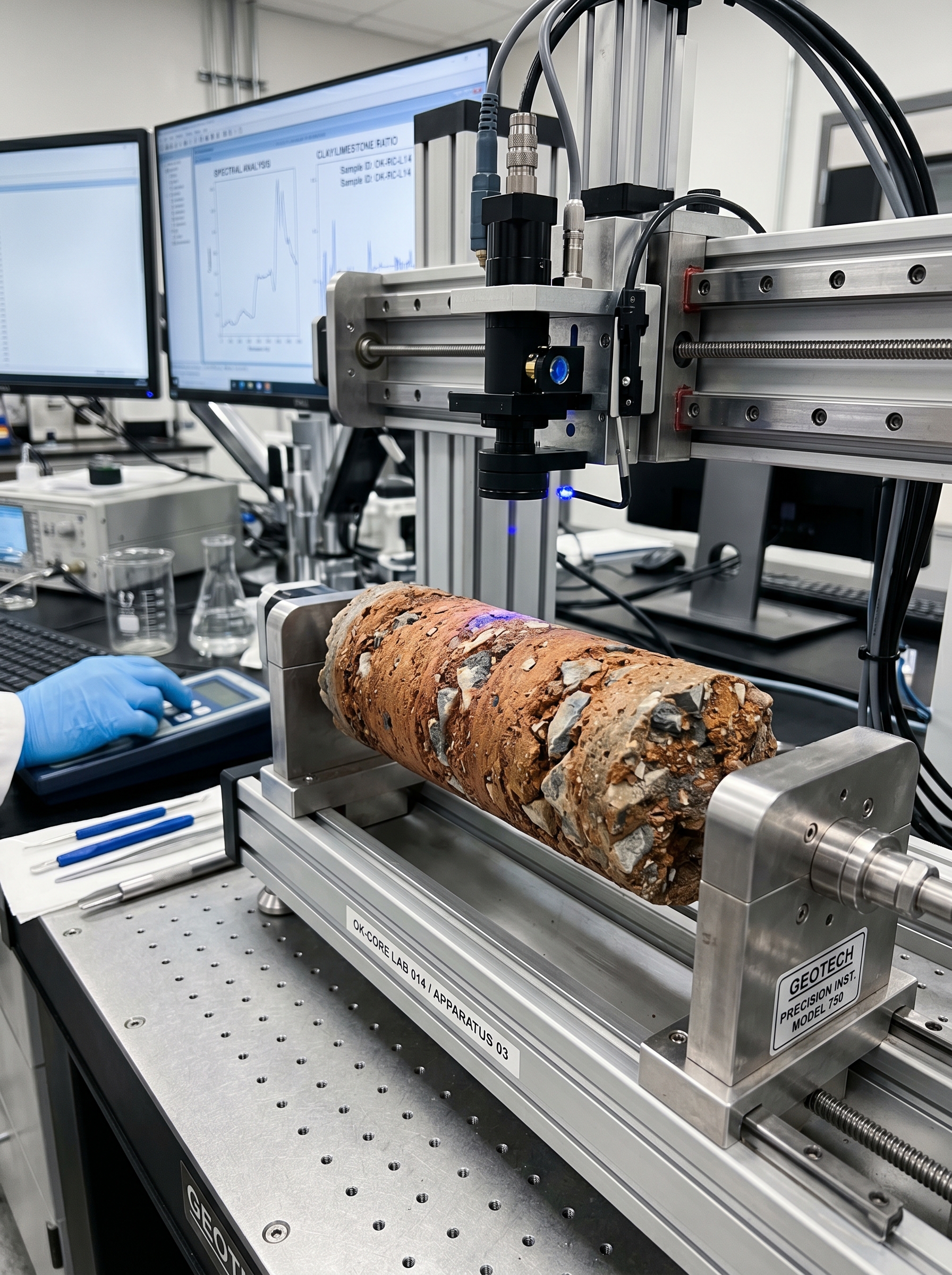
Tulsa is built on a foundation of High-Plasticity Index (PI) clay, a geological reality that dictates the failure or success of every major infrastructure project in Northeastern Oklahoma. To an engineer, this is a semi-fluid force that expands and contracts with violent, predictable energy.
Expansion & Void Creation
When Oklahoma clay saturates, its molecular structure absorbs water, increasing volume by up to 25%. During droughts, it shrinks, leaving massive subterranean voids. Standard concrete shells, built without geological stabilization, will inevitably shear.
Soil Replacement Protocol
In high-PI zones, we mandate over-excavation, removing expansive clay and replacing it with a 12-to-18-inch layer of non-compressible structural fill. This Sovereign Buffer absorbs movement before it reaches the concrete shell.
Tulsa's weathered shale beds become slippery when wet, causing lateral shifts. We utilize deep-bore concrete pilings to anchor the pool shell directly into stable, unweathered rock beneath.